 Lists
Lists Lists
Lists Loading previews...
Image (BMP)

|
Download |
![vIMG_0208[1].bmp](http://languagebox.edshare.ac.uk/2638/5.hassmallThumbnailVersion/vIMG_0208%5B1%5D.bmp "vIMG_0208[1].bmp") vIMG_0208[1].bmp |  DSCN0244.JPG |  2012-07-29_20.55.08_resized.jpg | ![iiiIMG_0206[1].bmp](http://languagebox.edshare.ac.uk/2638/3.hassmallThumbnailVersion/iiiIMG_0206%5B1%5D.bmp "iiiIMG_0206[1].bmp") iiiIMG_0206[1].bmp | ![ivIMG_0207[1].bmp](http://languagebox.edshare.ac.uk/2638/4.hassmallThumbnailVersion/ivIMG_0207%5B1%5D.bmp "ivIMG_0207[1].bmp") ivIMG_0207[1].bmp |
![viIMG_0209[1].bmp](http://languagebox.edshare.ac.uk/2638/6.hassmallThumbnailVersion/viIMG_0209%5B1%5D.bmp "viIMG_0209[1].bmp")
![viiIMG_0210[1].bmp](http://languagebox.edshare.ac.uk/2638/7.hassmallThumbnailVersion/viiIMG_0210%5B1%5D.bmp "viiIMG_0210[1].bmp")


![iiIMG_0205[1].bmp](http://languagebox.edshare.ac.uk/2638/2.hassmallThumbnailVersion/iiIMG_0205%5B1%5D.bmp "iiIMG_0205[1].bmp")


Kanga Images - Assorted
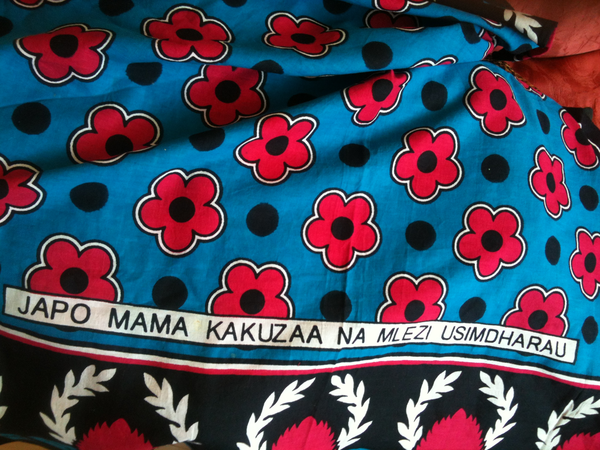
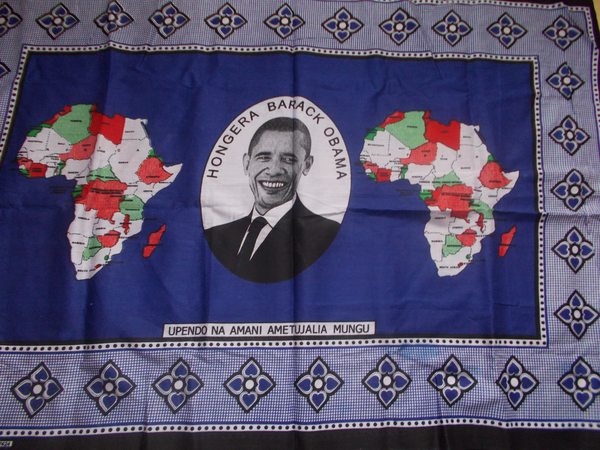
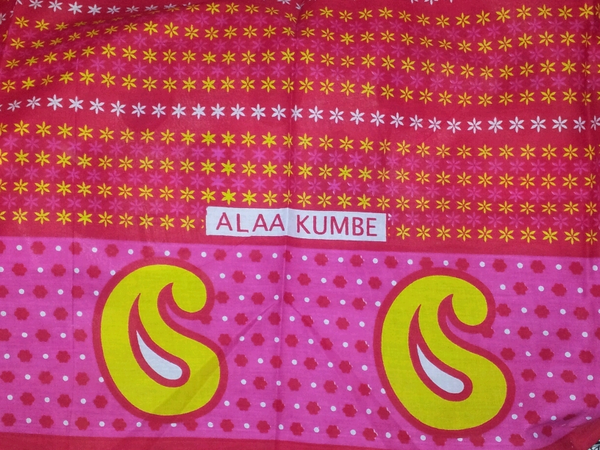
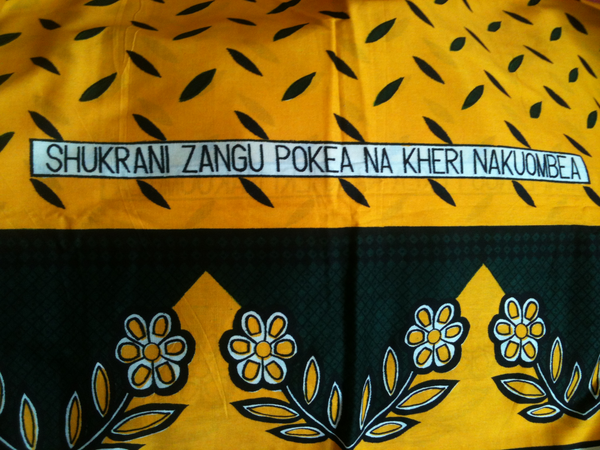
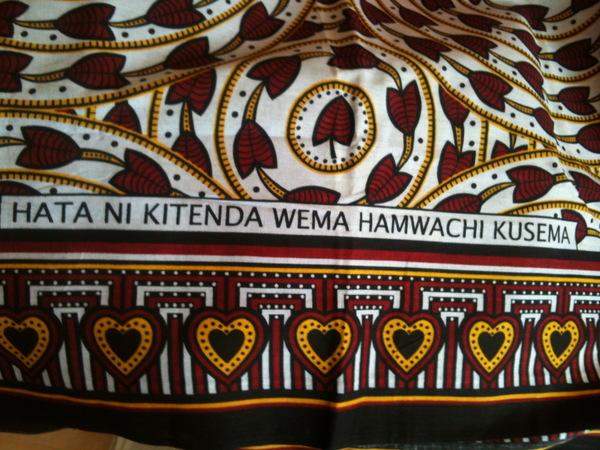
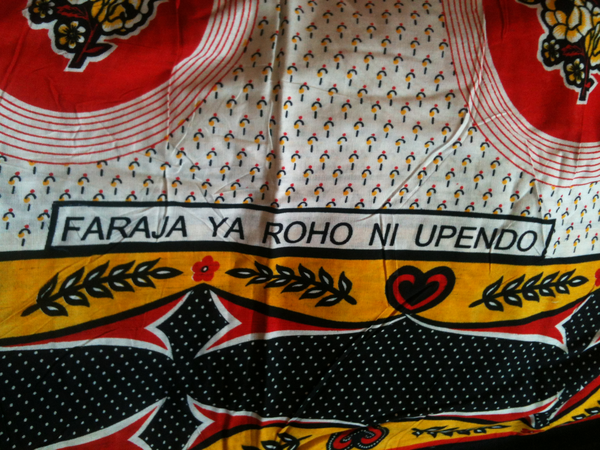
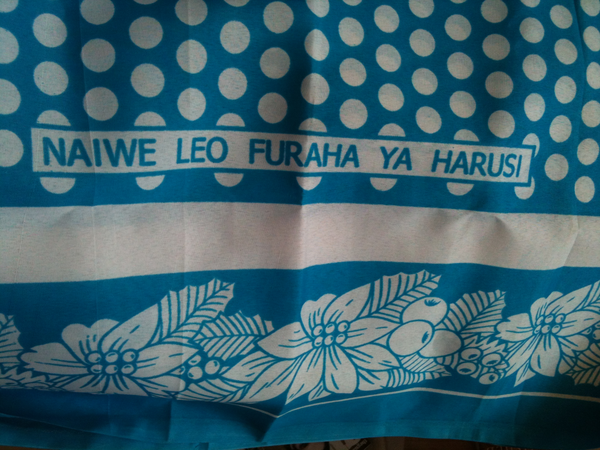
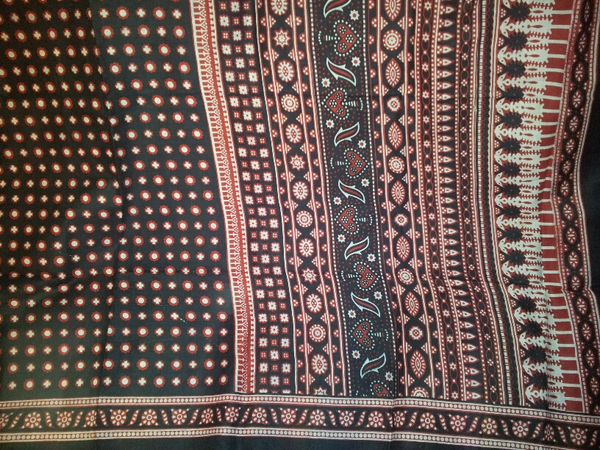
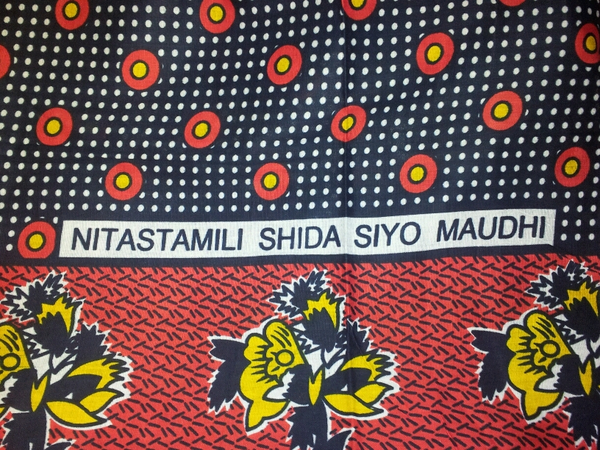
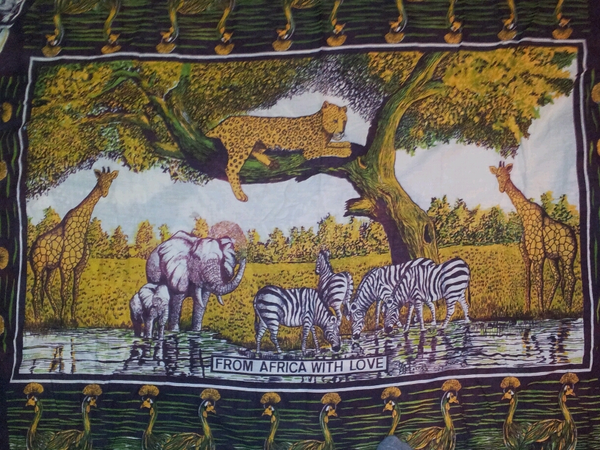
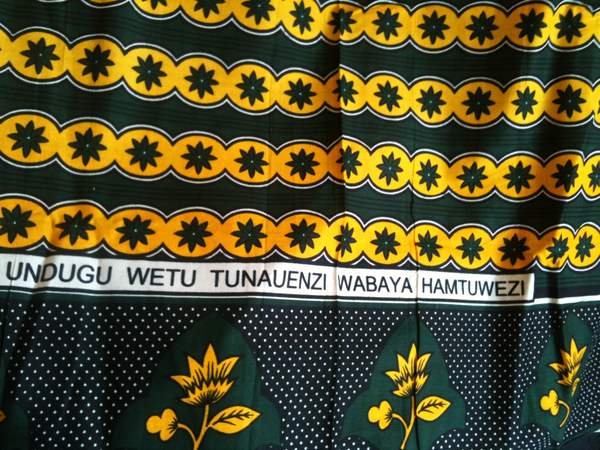
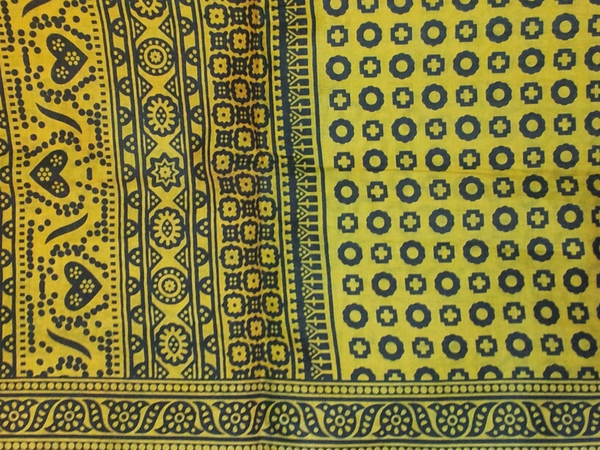
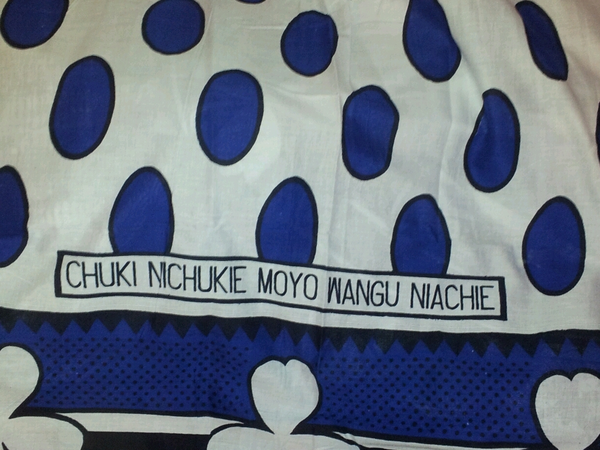
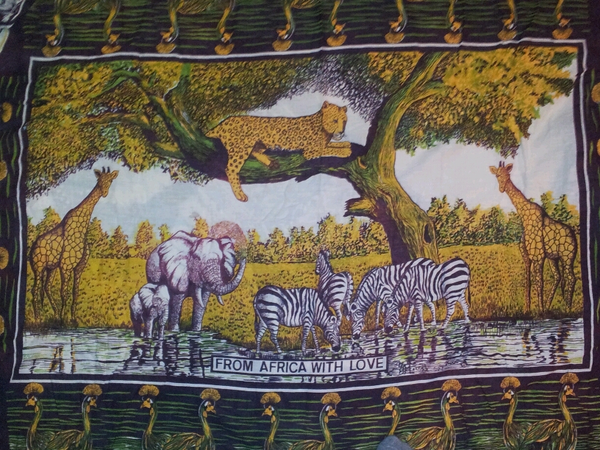
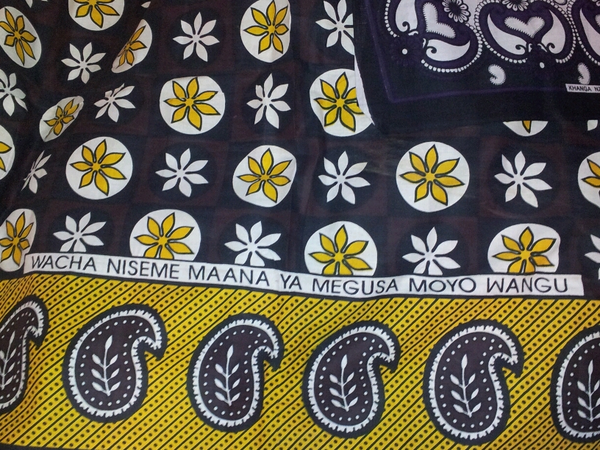
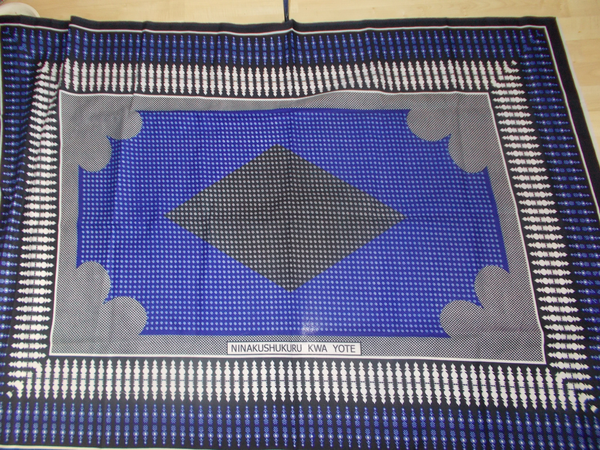
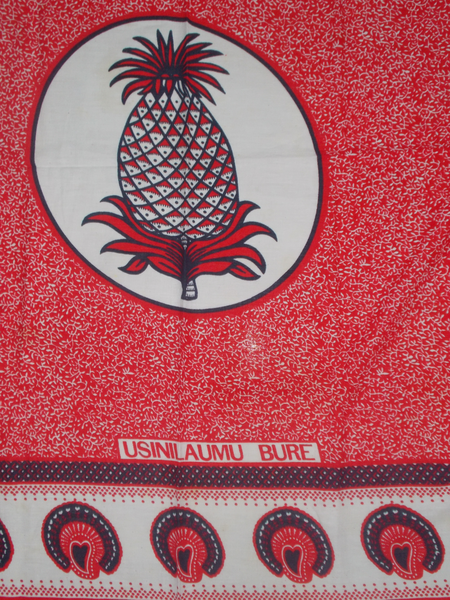
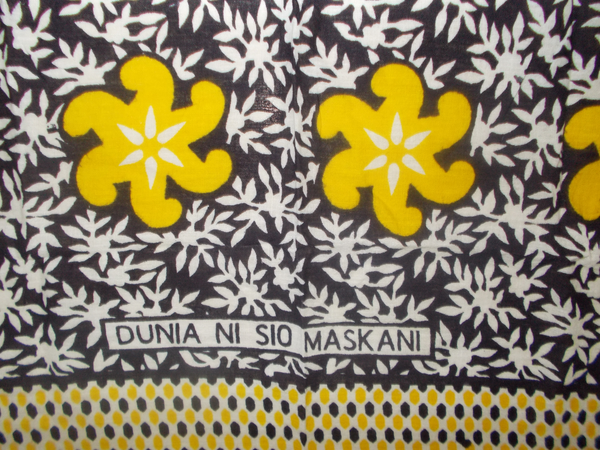
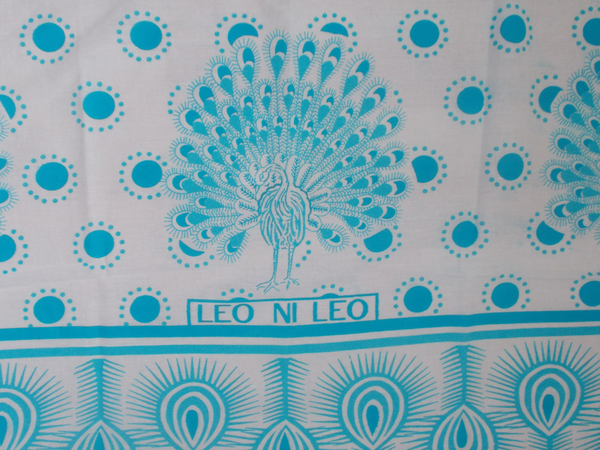
The kanga is a piece of cotton fabric worn around the waist shoulders and head. It has been around for about 200 years. Originally, the kanga used to be worn only by women, along the East African coast in Kenya and Tanzania. However, Madagascar has a similar fabric, known as the lamba hoany or lamba wani. My research shows that as time has changed, men are now beginning to wear the kanga too. The origin of the name kanga is disputed. On the one hand, it is thought that the fabric is named after the spotted guinea fowl, symbolized by spots on the fabric. On the other hand, it is thought that it is just by coincidence that the fabric has to have spots and that it bears the same name as the guinea fowl in Swahili. The author observes that in 1980s in Mwembe Tayari market in Mombasa Kenya there was a stall specializing in selling only second-hand kanga fabrics that its owner referred to as leso. This is particularly interesting because the only difference seemed to be that the leso was a kanga that had already been used. When the owner was asked the reason for this, she replied that the leso for her meant second-hand. More intriguingly for the author, these older items cost three times more than the brand new ones found in Mombasa sigh street shops. Besides, while such shops commonly sold unused kanga fabrics only in uncut fabric pairs, the second-hand stall that sold leso sold them in cut single pieces. The kanga’s main cultural significance, apart from being an item of clothing, is to spread messages. Originally, the written messages used to be in Swahili but in Arabic scrip, but my research shows that the fashion has recently included not only Swahili as the main language, but European languages, too. Without exception, these messages depict (day-to-day) life situations: polite or impolite; real or imagined; happy or sad; religious or political; celebratory or general; celebratory or general; romantic or spiteful and clever or witty. Additionally, a kanga may portray a message within the overall visual design. For example, the main visual design might be the map of Africa and the written message might be something like “Africa is a beautiful continent”. The kanga is rectangular in shape, with an area of about sixty by forty inches. It often has multiple borders framing an interior rectangle bearing simple or intricate designs within the overall design. These will usually be supported by a written message. However, there is a type of kanga whose aesthetic message is sufficient enough to make the point. This kanga is known as kanga bubu or “speechless kanga”. In spite of the fact that, originally, only women used it, current usage of the kanga is diverse. For example, tailoring for general family wear, tapestry, furniture covering, wall hanging, making hand-bags, wrapping by the Maasai men, and specialized tailoring for the Barotse men of Zambia, who prefer the softness of the kanga for making the liziba suits usually won during the Kwomboka ceremony. In both cases above, the Maasai and Barotse do not necessarily pay attention to the written messages on the kanga fabric. Their interest is mainly in the color design and the feel of the fabric. The kanga is softer and easier to manage for the requirements of the Barotse. The author’s attempt to classify the kanga’s written messages according to relevant topics can be viewed in this link: http://languagebox.ac.uk/view/languages/Swahili.html Nevertheless, it is virtually impossible to give just one meaning to each saying on a kanga; it is also difficult to place sayings under strict topics. This is because kanga messages are not direct and straightforward. For example, a kanga with a message that says “Leo ni leo” or literally “Today is today” could be a warning for an impending political conflict, like an election. Contrary to this, it could be announcing an exciting event, for example a wedding. Professor Zawawi notes: Although a woman is primarily trying to project a message to those with whom she is most in contact…when she goes…to buy a pair of kanga…she is attracted first by color and design. The message only comes later to enforce her choice…[but italics mine]...if the message does not please her, she casts aside the kanga...she does not want to buy unpopular messages.(2005:25). Zawawi, S M, 2005, Kanga: The Cloth That Speaks, Azaniya Hill Press, New York The kanga is a fabric that was created and used sorely by women of the East African coast around Kenya and Tanzania. However, its uses have now expanded beyond this original domain in terms of geographical area and usage. Yet, the kanga still mainly depicts Swahili culture and gives its social critiques through designed and written messages. In fact, deciphering such messages ought not to be restricted to one meaning and more importantly, should be understood within the Swahili people’s social context.
Kanga Images - Assorted.
![[img]](http://languagebox.edshare.ac.uk/2638/5/vIMG_0208%5B1%5D.bmp)
|
Image (BMP)
Download (9MB) | Preview |
|
![[img]](http://languagebox.edshare.ac.uk/2638/45/DSCN0244.JPG)
|
Image (JPEG)
Download (3MB) | Preview |
|
![[img]](http://languagebox.edshare.ac.uk/2638/57/2012-07-29_20.55.08_resized.jpg)
|
Image (JPEG)
Download (523kB) | Preview |
|
![[img]](http://languagebox.edshare.ac.uk/2638/3/iiiIMG_0206%5B1%5D.bmp)
|
Image (BMP)
Download (9MB) | Preview |
|
![[img]](http://languagebox.edshare.ac.uk/2638/4/ivIMG_0207%5B1%5D.bmp)
|
Image (BMP)
Download (9MB) | Preview |
|
![[img]](http://languagebox.edshare.ac.uk/2638/6/viIMG_0209%5B1%5D.bmp)
|
Image (BMP)
Download (9MB) | Preview |
|
![[img]](http://languagebox.edshare.ac.uk/2638/7/viiIMG_0210%5B1%5D.bmp)
|
Image (BMP)
Download (9MB) | Preview |
|
![[img]](http://languagebox.edshare.ac.uk/2638/33/2012-07-29_20.51.33_resized_%282%29.jpg)
|
Image (JPEG)
Download (667kB) | Preview |
|
![[img]](http://languagebox.edshare.ac.uk/2638/49/2012-07-29_20.51.48_resized.jpg)
|
Image (JPEG)
Download (618kB) | Preview |
|
![[img]](http://languagebox.edshare.ac.uk/2638/37/2012-07-29_20.56.30_resized_%282%29.jpg)
|
Image (JPEG)
Download (577kB) | Preview |
|
![[img]](http://languagebox.edshare.ac.uk/2638/2/iiIMG_0205%5B1%5D.bmp)
|
Image (BMP)
Download (9MB) | Preview |
|
![[img]](http://languagebox.edshare.ac.uk/2638/41/2012-07-29_21.08.28_resized_%282%29.jpg)
|
Image (JPEG)
Download (597kB) | Preview |
|
![[img]](http://languagebox.edshare.ac.uk/2638/51/2012-07-29_20.54.48_resized.jpg)
|
Image (JPEG)
Download (394kB) | Preview |
|
![[img]](http://languagebox.edshare.ac.uk/2638/59/2012-07-29_20.56.30_resized.jpg)
|
Image (JPEG)
Download (577kB) | Preview |
|
![[img]](http://languagebox.edshare.ac.uk/2638/60/2012-07-29_20.59.07_resized.jpg)
|
Image (JPEG)
Download (582kB) | Preview |
|
![[img]](http://languagebox.edshare.ac.uk/2638/70/DSCN0162.JPG)
|
Image (JPEG)
Download (3MB) | Preview |
|
![[img]](http://languagebox.edshare.ac.uk/2638/72/DSCN0200.JPG)
|
Image (JPEG)
Download (3MB) | Preview |
|
![[img]](http://languagebox.edshare.ac.uk/2638/71/DSCN0198.JPG)
|
Image (JPEG)
Download (3MB) | Preview |
|
![[img]](http://languagebox.edshare.ac.uk/2638/73/DSCN0205.JPG)
|
Image (JPEG)
Download (3MB) | Preview |
|
![[img]](http://languagebox.edshare.ac.uk/style/images/fileicons/application_msword.png) |
Microsoft Word
Download (33kB) |
Description
The kanga is a piece of cotton fabric worn around the waist shoulders and head. It has been around for about 200 years. Originally, the kanga used to be worn only by women, along the East African coast in Kenya and Tanzania. However, Madagascar has a similar fabric, known as the lamba hoany or lamba wani. My research shows that as time has changed, men are now beginning to wear the kanga too. The origin of the name kanga is disputed. On the one hand, it is thought that the fabric is named after the spotted guinea fowl, symbolized by spots on the fabric. On the other hand, it is thought that it is just by coincidence that the fabric has to have spots and that it bears the same name as the guinea fowl in Swahili. The author observes that in 1980s in Mwembe Tayari market in Mombasa Kenya there was a stall specializing in selling only second-hand kanga fabrics that its owner referred to as leso. This is particularly interesting because the only difference seemed to be that the leso was a kanga that had already been used. When the owner was asked the reason for this, she replied that the leso for her meant second-hand. More intriguingly for the author, these older items cost three times more than the brand new ones found in Mombasa sigh street shops. Besides, while such shops commonly sold unused kanga fabrics only in uncut fabric pairs, the second-hand stall that sold leso sold them in cut single pieces. The kanga’s main cultural significance, apart from being an item of clothing, is to spread messages. Originally, the written messages used to be in Swahili but in Arabic scrip, but my research shows that the fashion has recently included not only Swahili as the main language, but European languages, too. Without exception, these messages depict (day-to-day) life situations: polite or impolite; real or imagined; happy or sad; religious or political; celebratory or general; celebratory or general; romantic or spiteful and clever or witty. Additionally, a kanga may portray a message within the overall visual design. For example, the main visual design might be the map of Africa and the written message might be something like “Africa is a beautiful continent”. The kanga is rectangular in shape, with an area of about sixty by forty inches. It often has multiple borders framing an interior rectangle bearing simple or intricate designs within the overall design. These will usually be supported by a written message. However, there is a type of kanga whose aesthetic message is sufficient enough to make the point. This kanga is known as kanga bubu or “speechless kanga”. In spite of the fact that, originally, only women used it, current usage of the kanga is diverse. For example, tailoring for general family wear, tapestry, furniture covering, wall hanging, making hand-bags, wrapping by the Maasai men, and specialized tailoring for the Barotse men of Zambia, who prefer the softness of the kanga for making the liziba suits usually won during the Kwomboka ceremony. In both cases above, the Maasai and Barotse do not necessarily pay attention to the written messages on the kanga fabric. Their interest is mainly in the color design and the feel of the fabric. The kanga is softer and easier to manage for the requirements of the Barotse. The author’s attempt to classify the kanga’s written messages according to relevant topics can be viewed in this link: http://languagebox.ac.uk/view/languages/Swahili.html Nevertheless, it is virtually impossible to give just one meaning to each saying on a kanga; it is also difficult to place sayings under strict topics. This is because kanga messages are not direct and straightforward. For example, a kanga with a message that says “Leo ni leo” or literally “Today is today” could be a warning for an impending political conflict, like an election. Contrary to this, it could be announcing an exciting event, for example a wedding. Professor Zawawi notes: Although a woman is primarily trying to project a message to those with whom she is most in contact…when she goes…to buy a pair of kanga…she is attracted first by color and design. The message only comes later to enforce her choice…[but italics mine]...if the message does not please her, she casts aside the kanga...she does not want to buy unpopular messages.(2005:25). Zawawi, S M, 2005, Kanga: The Cloth That Speaks, Azaniya Hill Press, New York The kanga is a fabric that was created and used sorely by women of the East African coast around Kenya and Tanzania. However, its uses have now expanded beyond this original domain in terms of geographical area and usage. Yet, the kanga still mainly depicts Swahili culture and gives its social critiques through designed and written messages. In fact, deciphering such messages ought not to be restricted to one meaning and more importantly, should be understood within the Swahili people’s social context.
| Item Type: | Resource |
|---|---|
| Uploader: | |
| Added: | 28 May 2012 14:44 |
| Name: | |
| Tags: | FAVOR, Swahili |
| Viewing permissions: | World |
| Course codes: | UNSPECIFIED |
| URI: | http://languagebox.edshare.ac.uk/id/eprint/2638 |
Actions (login required)
 |
View Item |

